
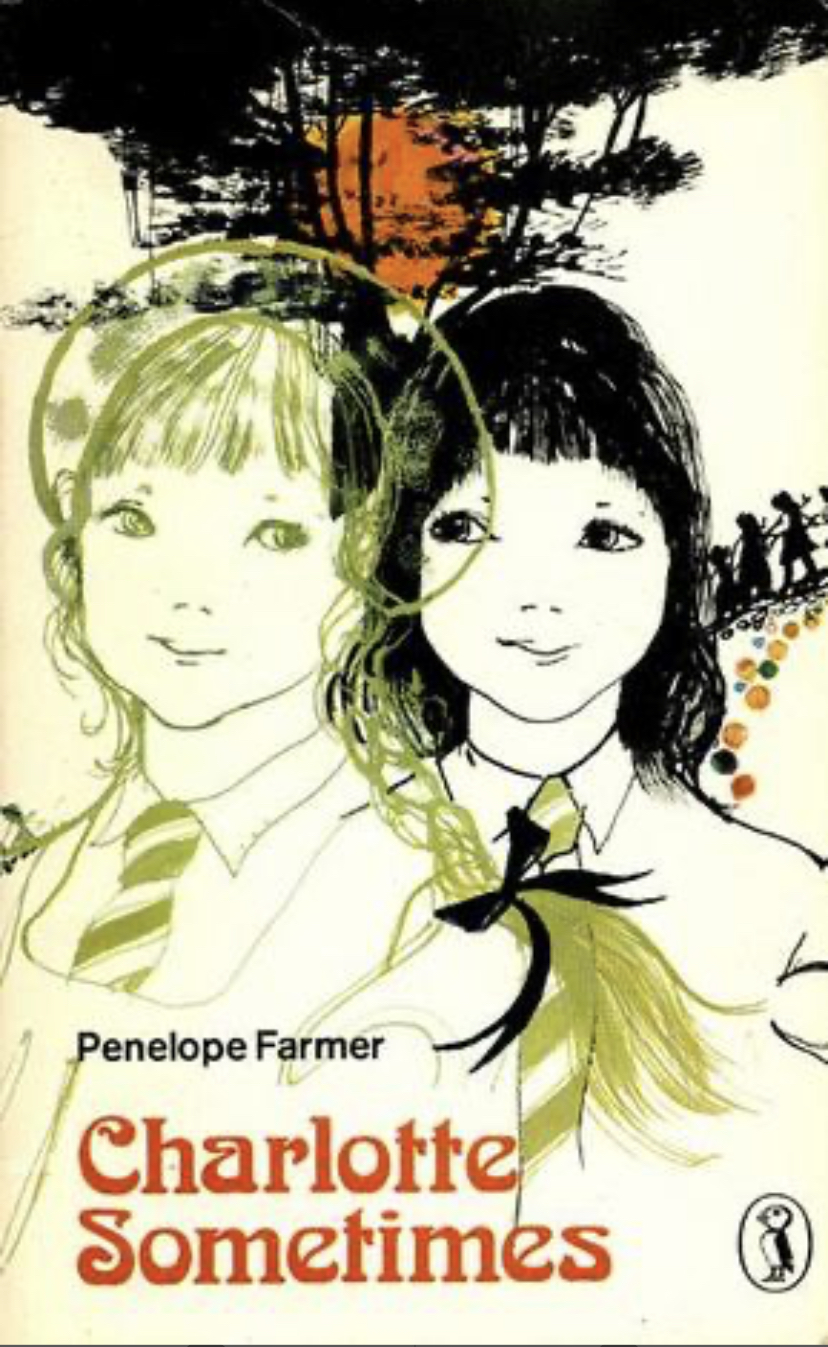
When I was little, my favourite chapter book was called ‘Charlotte Sometimes’ by Penelope Farmer.

It’s a time travel story about a girl who goes to boarding school and every day wakes up alternately in her own time or forty years earlier. So she has to contend with being the new girl in two settings. To everyone around her she seems slow and a bit odd, and she herself begins to question who she really is. I too was the new girl in a boarding school and had that whole sense of the ethereal after losing our Father just prior to joining.
Travel forty years forwards for me in my own time and I identify with Charlotte in a whole new way. Here I am, feeling like ‘Elizabeth Sometimes’ and never knowing what the world around me is going to look like when I wake up each morning.
Bipolar disorder causes extreme fluctuations in mood and although every emotion we have isn’t because of the illness, it can still be difficult to work out where normal mood variations end and the bipolar illness begins. For me, acknowledging the illness has been empowering but it has also led to me questioning who is my ‘true self’ that is separate from symptoms and biological vulnerabilities. Particular to BP2, people with it may not believe their moods have changed in the way others see them as changing. I’ve often been told that I’m doing too much and haven’t noticed it for myself. It’s helpful if the people closest to you know your stable personality traits versus the illness so they can help you identify a new episode. Recently I got some of the people who know me the best to tick off some of my traits and I did it too. It was so helpful, especially that they were all pretty much in agreement, otherwise we’d be looking at a totally different diagnosis!! The reasons for this exercise are twofold:
1. You get a base of what is your personality and what is your illness.
2. You can learn to use your innate traits to support you in your illness. For example if you’re sociable then use your friendship network to support you. If you’re assertive, use that to advocate for yourself. If you’re intellectual then research the illness and how to help yourself.
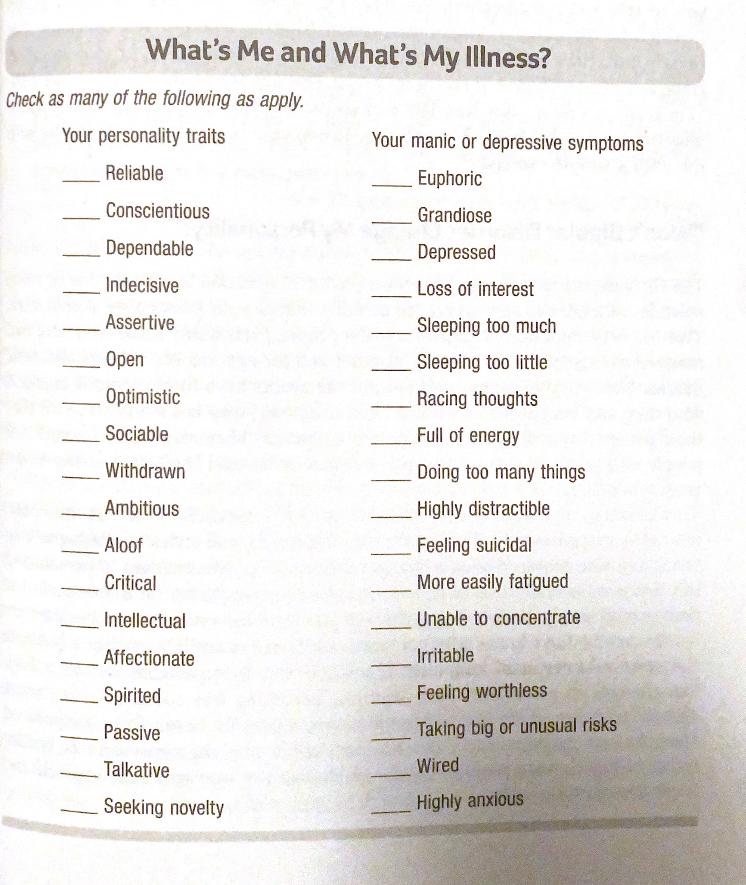
It’s always tricky to define what the illness is. Moodiness may reflect changes in the brain related to BP and can also be affected by hormones. I know I am more moody and irritable when I am moving between episodes, more than I ever was due to monthly hormone fluctuations.
Take sociability, I’ve always loved talking to people and being sociable. Changes to the way I do this are very indicative of an episode for me. When I’m down I will dread most social situations, avoid people and withdraw. When I’m okay I’m happy meeting up with people and instigating gatherings. Messaging people isn’t an issue. When I’m up I over do it, not just over committing with people I know, having grand plans of get togethers and future parties but also actively seeking out conversations even with people I don’t know. I will literally chat to anyone. And because my brain is firing faster I’m making connections and feel I need to share them with everyone else. The problem is that if I then drop after an up I end up regretting my over expansive chatter and can develop paranoia for the non existent repercussions. This brings shame, guilt, lower self esteem and back to withdrawal.
Wide mood swings change sleep patterns, appetite, routine, irritability and energy levels which obviously result in behaviour changes. If I can keep a handle on sleep, food and activity I should be able to manage the illness to some degree, but at the moment I can’t. The hardest is when the ‘up’ is coming and you really don’t want to give up the extra energy levels. My mind works so fast and I’m so productive that I feel like making the most of it. Who doesn’t want to make the most of a greater number of more productive hours in a day?!
With BP2 the dominant mood state is depressive and depression dampens your motivation to initiate activities, work, socialise and it reduces creativity. I also get problems with memory and concentration that make the normal world a mildly confusing place that demands way too much a lot of the time. So the more episodes you have, the more time you have feeling that you’re not quite keeping up with the world around you. I feel as I’ve got older and I’ve begun to cycle more rapidly that I’m more often in the depressive state and I’m losing the fun, sociable and spirited side of myself.
Personality traits are qualities that are permanent, part of who you are. They’re often from a genetic influence and are shaped by life experiences. Bipolar takes these traits to extremes including wiping them out completely for lengths of time. Sometimes the interests that you’ll see me immersed in for a while such as running or writing will suddenly disappear. But sometimes it’s the personality traits that are affected like sociability or decisiveness. So I have to conclude that until I get a mood stabiliser that works, I am ‘Elizabeth Sometimes’ and patience will need to be the one constant personality trait.

I do see Bipolar as a type of ongoing identity crisis. I’m always asking if how I feel arises naturally from a situation or is it just my disorder acting up. It is hard to know when your moods are at extremes. It took me years of studying myself to understand my triggers. I’ve gone through a similar exercise with my friends and taught them to recognize my manic symptoms. I think it is easier for our friends and family to see the small changes that might be the beginning of an episode.